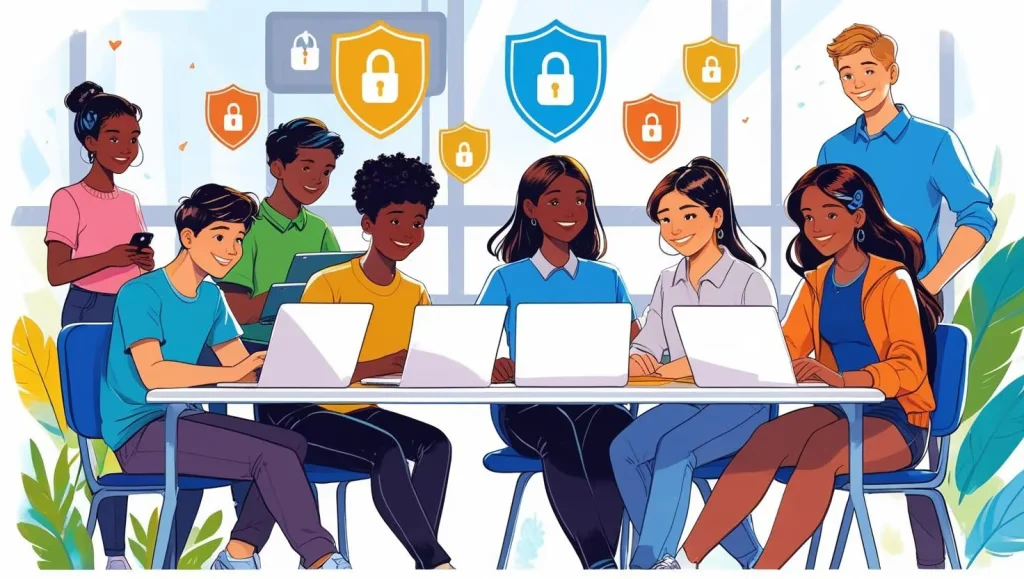
Cybersecurity Basics for Kids – Simple Online Safety Guide
Cybersecurity Basics for Kids: Teach Online Safety the Easy Way
In today’s digital world, teaching cybersecurity basics for kids is just as important as teaching them how to cross the road safely. Kids are using the internet every day—for games, schoolwork, and even talking to friends. But without guidance, they can face serious online risks.
Let’s learn how to keep children safe and smart online with simple cybersecurity tips every parent can use.
Why Cybersecurity Matters for Kids
Children are curious explorers, but that same curiosity can make them vulnerable online. Hackers, scammers, and inappropriate content are just a few dangers kids might encounter.
Cybersecurity for kids is all about helping them:
- Understand what’s safe to click
- Keep personal info private
- Use strong passwords
- Recognize online dangers
Simple Cybersecurity Tips Every Kid Should Know
1. Keep Your Password a Secret
Teach your kids to never share passwords with friends—even their best friend. Use a mix of letters, numbers, and symbols. Try using passphrases like “IlovePizza@123”.
✅ Pro tip: Use a password manager (with parental help).
2. Don’t Talk to Strangers Online
Just like in the real world, children should never chat with strangers online. Remind them not to accept friend requests from people they don’t know.
📌 Tip: Use parental controls to monitor chat apps and social platforms.
3. Think Before You Click
A fun-looking ad or message might be a scam. Kids should never click unknown links or download random files. It might lead to malware.
🛡️ Safety: Install a trusted antivirus or firewall on their device.
4. Don’t Share Personal Information
Make sure your child knows to never share:
- Full name
- Address
- School name
- Phone number
- Pictures without permission
This helps avoid cyberbullying and identity theft.
5. Always Ask a Grown-Up for Help
If something online seems weird or scary, kids should feel safe to talk to an adult. Encourage open communication so they don’t hide problems.
👪 Tip: Cyber safety is a family responsibility.
Fun Ways to Teach Cybersecurity to Kids
Make learning fun! Try these:
- Story-based games on online safety
- Cybersecurity cartoons or YouTube videos
- Interactive quizzes or board games
- Create a “cyber hero” role-play activity
Cybersecurity Resources for Parents
- NetSmartz by NCMEC – Safety resources and games
- Google Be Internet Awesome – Great interactive learning for kids
- Common Sense Media – Reviews and privacy guides
📘 Tip: Consider installing child-safe browsers and privacy plugins.
Conclusion: Start Cyber Safety Early
The internet is a big part of kids’ lives—but they don’t always know how to stay safe. That’s why teaching cybersecurity basics for kids is so important. Make it a habit to talk about online safety regularly and stay involved in your child’s digital life.
A safe kid is a smart kid!