
Introduction
The internet we use every day — Google, YouTube, social media, news sites — is only a small part of the online world. Beyond this visible space exists something many people call the darknet, a place surrounded by mystery, curiosity, and sometimes misunderstanding. When people search for “darknet desires,” they are often not looking for danger — they are simply curious. They want to understand what lies behind the hidden layers of the internet and why it attracts so much attention.
This article breaks down the topic in simple, honest language. Instead of hype or fear, let’s look at the human side of this curiosity and the reality behind it.
What Is the Darknet — In Simple Words?
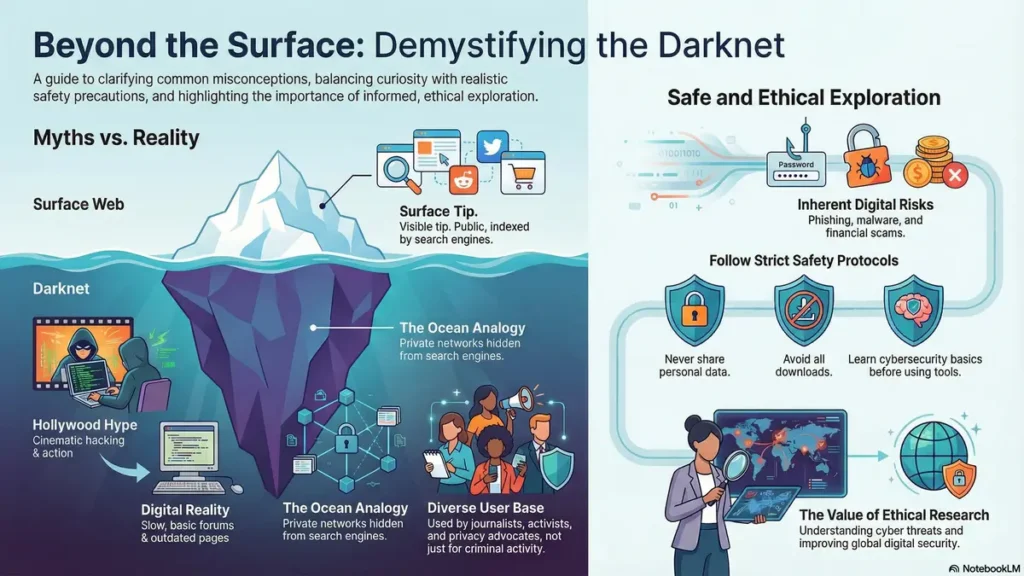
Think of the internet like an ocean. The websites you normally visit are just the surface. Below that surface are private networks and hidden websites that don’t appear on regular search engines. That deeper layer is often called the darknet.
People usually access it using special tools designed to protect privacy and identity. Some use it for secure communication or research, while others explore it simply because they’ve heard stories about it online. The truth is, most darknet pages are not dramatic or cinematic — many look like basic forums or old-style websites.
Why Are People Drawn to “Darknet Desires”?
Curiosity is a natural human emotion. When something is described as hidden or secret, it instantly feels more interesting. Here are a few real reasons people become interested:
Curiosity About the Unknown
Humans have always wanted to explore things that feel mysterious. The darknet has gained a reputation online, which makes people wonder what it’s really like.
A Need for Privacy
In a world where apps track clicks and ads follow users everywhere, privacy feels rare. Some people explore darknet tools because they want to understand how anonymous browsing works.
Learning About Cybersecurity
Students, ethical hackers, and tech professionals often study darknet spaces to understand cyber threats. By observing how hackers communicate, they learn how to build stronger security systems.
Searching for Different Communities
Some users are simply looking for discussions or communities that feel more private or less controlled than mainstream platforms.
The Reality: Less Drama, More Responsibility
Movies and viral posts often make the darknet look like a dangerous digital underworld. But the reality is more ordinary — and sometimes more risky than exciting. Many sites are outdated, slow, or filled with scams.
There are genuine dangers too:
Fake marketplaces and online fraud
Malware hidden in downloads
Phishing links designed to steal data
Content that may be disturbing or unsafe
Understanding these risks helps turn curiosity into informed awareness.
Darknet Desires and Human Psychology
The word “desires” doesn’t always mean something negative. Often, it simply describes the urge to explore what feels hidden. Psychologically, people are drawn toward mystery because it feels exclusive. When media describes something as secret, our brain automatically becomes more interested.
Social media trends also play a big role. Viral videos sometimes exaggerate the darknet, making it seem like a place full of secrets waiting to be discovered. In reality, much of the experience is quiet, technical, and sometimes boring.
A Learning Tool for Cybersecurity Enthusiasts
For people interested in cybersecurity — especially students or ethical hackers — understanding darknet behaviour can be educational. Observing discussions about malware or data leaks helps professionals improve online safety.
If your interest comes from learning, you may gain insights such as:
How cybercriminals communicate online
The importance of digital anonymity
Common hacking tactics and scams
Why cybersecurity awareness is essential today
The key difference is intention. Ethical research focuses on learning and protection, not participating in illegal activities.
Clearing Up Common Myths
Let’s talk honestly about a few misconceptions:
“The darknet is only used for crime.”
Not true. Journalists, activists, and privacy advocates sometimes use encrypted networks to communicate safely.
“You are completely invisible there.”
Also not true. Without proper knowledge, users can still expose their identity through small mistakes.
“Everything there is advanced or futuristic.”
Many pages are simple and look like early internet forums.
When we remove myths, the topic becomes less scary and more understandable.
How to Stay Safe While Learning About the Darknet
If you are exploring this topic for educational reasons, safety should always come first. Here are some simple guidelines:
Learn basic cybersecurity before trying new tools.
Avoid sharing personal details or financial information.
Never download files from unknown sources.
Understand the legal rules in your country.
Focus on research, not risky behaviour.
Being curious is normal — but being informed is essential.
Why “Darknet Desires” Is Trending Online
From an SEO and digital marketing perspective, keywords like “darknet desires” are becoming popular because they mix technology with emotion. People don’t just want technical explanations; they want stories, clarity, and honest information.
Content that performs well usually has:
Clear headings and simple explanations
A balanced view — not fear, not hype
Helpful safety tips
A human tone that feels real and relatable
Search engines today reward content that answers genuine questions rather than sensationalizing topics.
The Future of Darknet Curiosity
As privacy becomes more important in the digital age, discussions about hidden networks will continue to grow. The focus may shift from mystery toward education — helping people understand encryption, data protection, and digital rights.
Instead of being seen as a dark or dangerous space, the conversation might evolve into something more practical: how technology can protect users while keeping the internet safe.
Final Thoughts
“Darknet desires” isn’t just about secret websites — it’s about human curiosity. People want to understand what they don’t see every day, especially in a world where privacy and technology are constantly changing.
By approaching the topic with awareness, ethical thinking, and realistic expectations, anyone can learn about the hidden side of the internet without falling into myths or risks. The goal isn’t to chase mystery — it’s to understand technology in a smarter, safer, and more responsible way.
FAQs About Hidden Web, Anonymous Browsing, and Online Privacy
1. What is the hidden web in simple terms?
The hidden web refers to online spaces that are not indexed by regular search engines and require special access methods or private networks.
2. Why do people use anonymous browsing tools?
Many users prefer anonymous browsing to protect their identity, avoid tracking, and maintain digital privacy while exploring the internet.
3. Are private networks safe for beginners?
They can be safe if used responsibly, but beginners should first learn cybersecurity basics and avoid clicking unknown links or downloads.
4. Is anonymous internet access legal?
Using privacy-focused technology is generally legal, but illegal activities performed online can lead to serious legal consequences.
5. What are common risks in hidden online spaces?
Users may encounter scams, phishing pages, fake communities, or harmful files if they explore without proper knowledge.
6. How do cybersecurity professionals study hidden networks?
Experts observe discussions, track threat patterns, and analyze security trends to improve digital protection systems.
7. Can someone stay fully invisible online?
Complete invisibility is difficult because small mistakes like sharing personal data or weak security settings can reveal identity.
8. Why is interest in online privacy growing?
People are becoming more aware of data tracking, targeted ads, and digital surveillance, which increases demand for secure browsing methods.
9. Are there positive uses of encrypted communication platforms?
Yes, journalists, researchers, and privacy advocates use secure platforms to communicate safely and protect sensitive information.
10. How can beginners learn about hidden networks safely?
Start by studying ethical cybersecurity practices, use trusted resources, avoid risky downloads, and focus on education rather than experimentation.
11. What is anonymous communication online?
Anonymous communication means sending messages or sharing information without revealing your real identity, often using encryption or privacy-focused tools.
12. Do hidden online forums still exist today?
Yes, many private forums and invite-only communities exist where users discuss technology, privacy, and niche interests.
13. How can someone improve digital privacy while browsing?
Using strong passwords, enabling two-factor authentication, avoiding suspicious links, and learning basic cybersecurity practices can improve privacy.
14. Why do search trends about hidden internet spaces keep growing?
Increased awareness of data privacy, cyber threats, and secure communication has made more people curious about alternative online environments.
15. What should students learn before researching anonymous networks?
Students should first understand ethical hacking basics, online safety rules, and legal boundaries to ensure responsible learning.
16. What are encrypted networks and how do they work?
Encrypted networks protect data by converting information into secure code, making it harder for outsiders to read or track online activity.
17. Can hidden online spaces be used for education and research?
Yes, cybersecurity learners and digital researchers sometimes study these environments to understand online threats and privacy technology.
18. How can someone identify scams in private online communities?
Warning signs include unrealistic offers, requests for money or personal details, and links that look suspicious or unverified.
19. Why is digital anonymity becoming more important today?
Growing concerns about data tracking, online surveillance, and cybercrime are encouraging people to learn about privacy-focused tools.
20. What is the safest mindset when exploring advanced internet topics?
Always focus on ethical learning, follow legal guidelines, protect personal information, and prioritize cybersecurity awareness.
🌟 Stay Connected with Coding Journey 🌟
Friends,
I’ve started Coding Journey to share tech knowledge, cybersecurity awareness, digital marketing tips, and practical tutorials to help everyone grow safely in the digital world.
If you find value in learning about:
✅ Linux & Cybersecurity
✅ Digital Marketing & SEO
✅ Online safety & scam awareness
✅ Practical tech guides
I’d really appreciate your support and follow 🙏
🔗 Official Website & Blog
🌐 https://codingjourney.co.in
📝 https://codingjourney1983.blogspot.com
🔗 Follow on Social Media
🔵 Facebook: https://www.facebook.com/people/Coding-journey/61585197473575/
💼 LinkedIn: https://www.linkedin.com/in/sunil-kumar-tiwari-07b8b466
🐦 X (Twitter): https://x.com/suniltiwari4509
📸 Instagram: https://www.instagram.com/coding9529/
📌 Pinterest: https://in.pinterest.com/codingjourney1983/
❓ Quora: https://www.quora.com/profile/Sunil-4966
✍️ Medium: https://medium.com/@codingjourney1983
Your one follow, like, or share really motivates me to create more helpful content 💙
Thank you for supporting Coding Journey 🙌
Let’s learn, grow, and stay secure together.
Related Posts
 Google Dorks for OSINT: 9 Dangerous Risks Explained
Google Dorks for OSINT: Many people don’t realize that information left online can be easily…
 Smartphone Security Tips: 12 Risks Exposing Your Data Now
Smartphone Security Tips When at his local chai stall, Raj, to make a ₹50 UPI…
 IoT Device Security Standards: 10 Hidden Risks & Fixes
IoT device security standards may be the furthest thing from your thoughts when you are…


I visit daily some websites and blogs to read articles or reviews, except this webpage presents quality based articles.
Thank you for your thoughtful feedback—I truly appreciate it.
It means a lot to know that, among the many websites and blogs you visit daily, you find the content here to be valuable and quality-driven. Maintaining high standards in terms of accuracy, relevance, and readability is always a top priority.
Your support and engagement are highly motivating. I look forward to continuing to provide insightful and well-researched content.
Thanks again for taking the time to share your experience.